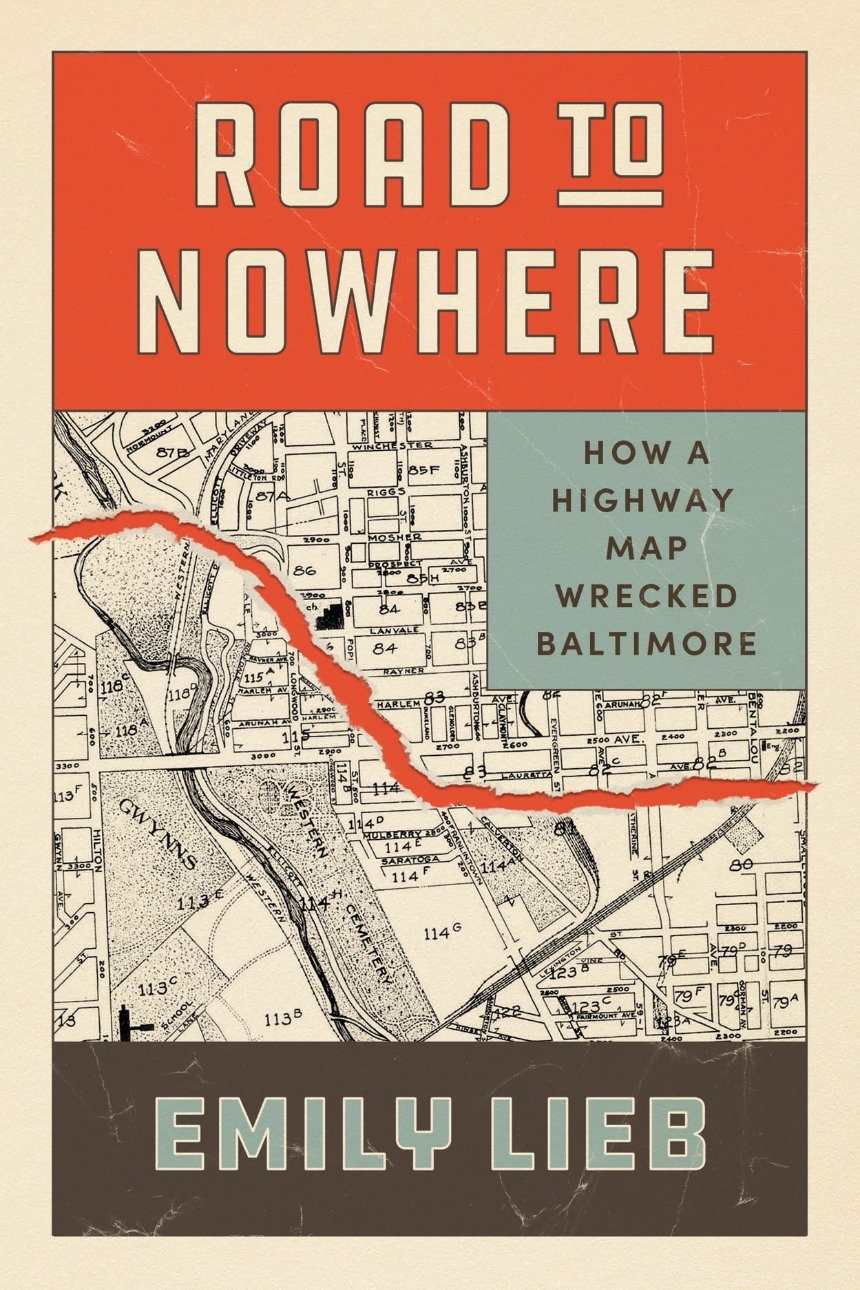
Road to Nowhere: How a Highway Map Wrecked Baltimore
Traces the birth, plunder, and scavenging of Rosemont, a Black middle-class neighborhood in Baltimore
University of Chicago Press, 2025
University of Mary Washington Center for Historic Preservation Book Prize (2026)
In the mid-1950s Baltimore’s Rosemont neighborhood was alive and vibrant with smart rowhouses, a sprawling park, corner grocery stores, and doctor’s offices. By 1957, a proposed expressway threatened to gut this Black, middle-class community from stem to stern.
That highway was never built, but it didn’t matter—even the failure to build it destroyed Rosemont economically, if not physically. In telling the history of the neighborhood and the notional East–West Expressway, Emily Lieb shows the interwoven tragedies caused by racism in education, housing, and transportation policy. Black families had been attracted to the neighborhood after Baltimore’s Board of School Commissioners converted several white schools into “colored” ones, which had also laid the groundwork for predatory real-estate agents who bought low from white sellers and sold high to determined Black buyers. Despite financial discrimination, Black homeowners built a thriving community before the city council formally voted to condemn some nine hundred homes in Rosemont for the expressway, leading to deflated home values and even more predatory real estate deals.
Drawing on land records, oral history, media coverage, and policy documents, Lieb demystifies blockbusting, redlining, and prejudicial lending, highlighting the national patterns at work in a single neighborhood. The result is an absorbing story about the deliberate decisions that produced racial inequalities in housing, jobs, health, and wealth—as well as a testament to the ingenuity of the residents who fought to stay in their homes, down to today.
Lieb skillfully documents the economic destruction caused by the ‘ghost highway’ and the people who profited from it.—The Baltimore Banner
Road to Nowhere is an absorbing, meticulously researched indictment of how blight is often a manufactured condition rather than an organic one. It challenges the notion that residents are responsible for their neighborhood’s decay, placing the blame squarely on the shoulders of the planners, politicians, and power brokers who refused to see the humanity of the people in their path.—Planetizen
A good introduction into how local and federal policies and interests shaped not only this part of Baltimore but many other, usually non-White neighborhoods in other cities across the country.—The Urbanist
Buy Road to Nowhere
Find Road to Nowhere in a library
Talk about Road to Nowhere on Goodreads